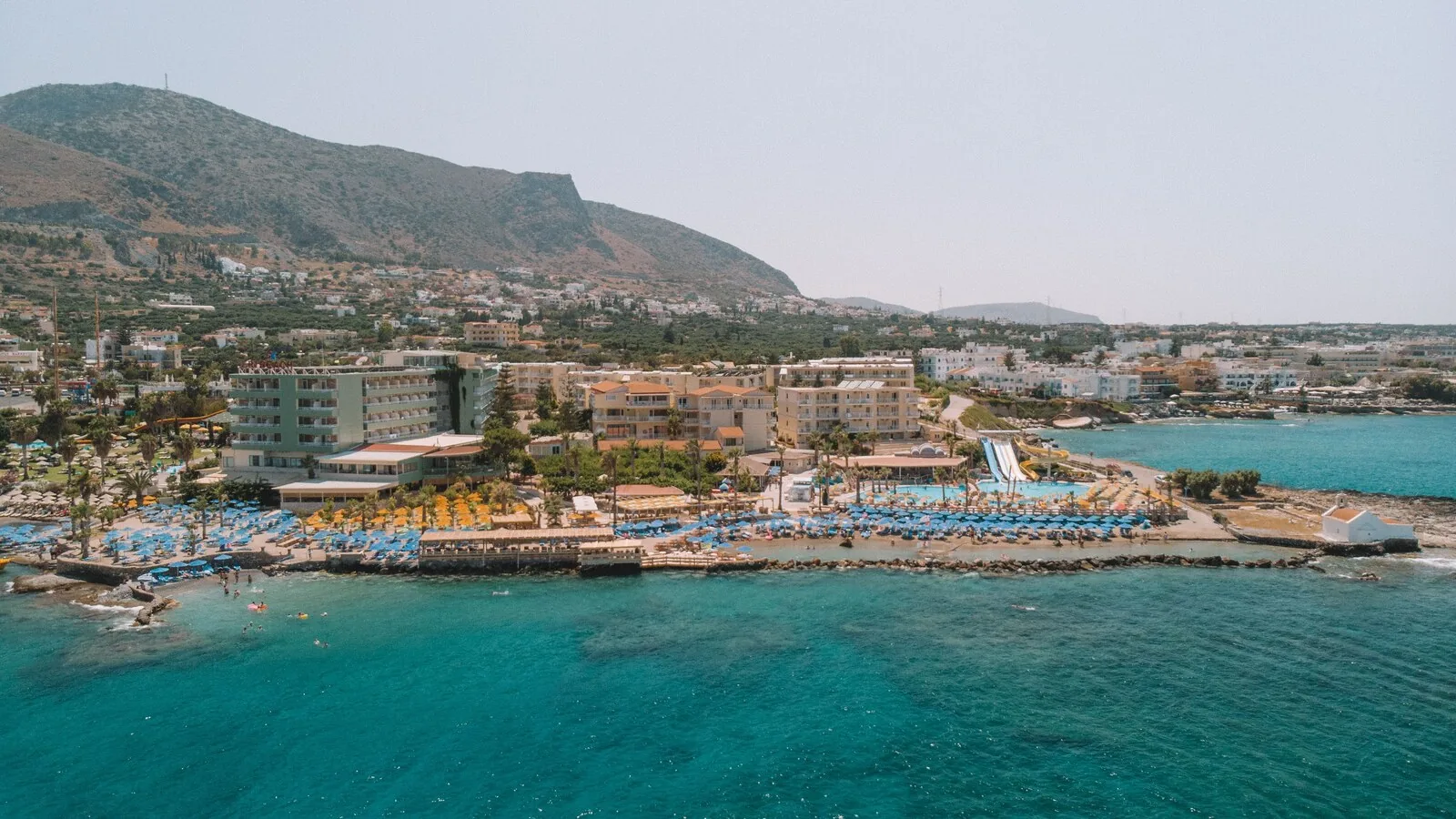
A headline saying that Greece has “banned building within 25 metres of the coast” can be seriously misleading. Joint Ministerial Decision YPEN/DNEP/89997/3071/2026, published in Government Gazette D 658/7 August 2026, approves the new Tourism Special Spatial Framework. The 0-25 metre provision belongs to that sector-specific system of tourism planning. It is not a universal ban that, by itself, decides the legal position of every home, plot or commercial property in Greece.
1. What the new decision actually adopts
The Tourism Special Spatial Framework is a national planning instrument. It classifies areas according to their tourism profile, sets directions for accommodation and special tourism infrastructure, and guides where and under what conditions new tourism development may take place. It also addresses islands, environmentally sensitive areas, landscapes and coastal zones, while directing lower-level plans such as Local and Special Urban Plans.
The coastal rule appears in Article 6 of the Joint Ministerial Decision. The official wording provides for a complete ban on alterations and structures within 0-25 metres of the coastline. “Alterations” is important: the assessment cannot be limited to the footprint of the main hotel building. Terraces, retaining works, platforms, pools, permanent access arrangements and other fixed interventions may also need to be examined.
2. Why this is not a nationwide ban on every property
The Decision is not a stand-alone building code replacing all Greek planning rules overnight. Its legal subject is tourism spatial planning. It is therefore especially relevant to new tourism facilities, extensions, organised tourism development areas and the plans that regulate tourism land uses. Its directions are binding or guiding, depending on the administrative act and planning level involved.
For a private residence, an existing lawful building or a non-tourism activity, the answer cannot be inferred from a short news headline. The use of the property, the exact coordinates, the officially determined seashore and beach lines, the local plan, any old-shore zone, Natura protection, archaeological controls, special presidential decrees and existing permits must all be checked. A stricter local or environmental rule remains relevant. In short, the 25-metre provision is not a universal ban on all construction throughout Greece.
3. What the 0-25 metre rule means for a tourism project
A new coastal resort cannot assess compliance merely by placing its main building beyond the strip. The design team should map every proposed intervention near the coastline: building elements, decks, walls, stairs, ramps, pools, paved areas, service routes, technical installations and landscape works. Whether a particular item is a prohibited structure, a prohibited alteration or an authorised exceptional work must be determined from its real design and legal basis, not from a convenient commercial label.
The Ministry's official FAQ calls the rule strict and immediately applicable. A concept design that ignores it may face redesign, delay or refusal at a later licensing stage. The sensible response is not to assume that all coastal tourism investment has become impossible. It is to map the strip at the feasibility stage, move ordinary facilities outside it and document any claimed exception before land is bought or a final architectural scheme is approved.
4. From which line are the 25 metres measured?
The Decision uses the term “coastline”. In practice, a developer should not rely on a line drawn from an online satellite image or an approximate measurement made during a site visit. The physical edge of the sea may change, while the same parcel may also be affected by formally determined seashore, beach and old-seashore lines, each with distinct legal consequences.
A licensed engineer should connect a georeferenced survey and the project's coordinates with the available official diagrams and administrative records. Legal review should establish whether a determination has been published or amended and whether a separate protective regime applies. A sales brochure stating that a structure is “about 27 metres from the water” is not adequate evidence for acquisition, financing or a permit application.
5. The narrow accessibility and ambulance exceptions
The text permits alterations required for access by persons with disabilities and for ambulance access. These exceptions serve concrete accessibility and emergency needs. They do not allow a broad leisure terrace, private road or commercial beach arrangement to be re-labelled as an accessibility measure.
The proposed route, width, materials, gradient and environmental footprint should be proportionate to the documented need and covered by the approvals required in the particular case. Ambulance access does not automatically legalise every service road or parking area. Accessibility should likewise be integrated from the start so that a genuinely necessary route can be distinguished from unrelated landscaping or hospitality facilities.
6. What the reference to Law 2971/2001 does and does not allow
The Decision also excludes works provided for under Law 2971/2001, as amended, from the general 0-25 metre prohibition. That Law regulates the seashore, beach and related public coastal matters and establishes special procedures for certain works and concessions. The reference is not an open licence for any structure serving a beachfront hotel.
The project must identify the exact statutory provision that covers the proposed work, its qualifying purpose, the competent State Property Service and every environmental, port or other approval required. Legality follows from the true function of the work and a complete administrative procedure. Calling a platform “coastal infrastructure” in a drawing does not bring it within Law 2971/2001.
7. Which pending procedures may benefit from transitional arrangements
Article 14 contains transitional provisions for tourism-facility licensing, approval of organised tourism development areas and certain Special Urban Plans that were already under way when the Framework was published. The decisive condition is not simply that someone had started discussing the project. Before publication, one of the acts listed by Article 14 must have been issued or the corresponding complete file must have been submitted.
The list includes, depending on the procedure, an environmental approval or recommendation, standard environmental commitments, a complete Environmental Impact Assessment or Strategic Environmental Assessment file, pre-approval of a Special Urban Plan, pre-approval or issuance of a building permit, a complete building pre-approval file, and specified investment or funding approvals. Approved strategic investments under the statutes named in Article 14 are also addressed.
A preliminary drawing, an incomplete online submission or a private purchase agreement will not necessarily secure the earlier regime. The operator should build a dated file containing protocol numbers, proof of completeness and the exact administrative act relied upon. Where the record is uncertain, written confirmation from the competent authority is far more valuable than an informal assurance.
8. Existing hotels, permits and environmental approvals
The Framework does not treat a lawfully existing building as though it were a proposed new structure. It includes specific provisions for existing tourism accommodation, certain expansions, environmental approvals and standard environmental commitments that were valid at publication. Those provisions must be read carefully and matched to the actual project.
An existing permit does not necessarily cover a future extension, change of use, pool, deck or new outdoor alteration inside the strip. Before renovation, the owner should separate the lawful existing envelope, maintenance works, changes requiring a new permit and entirely new interventions. The remaining validity and conditions of the environmental approval should be checked against the current plans, rather than relying on the date printed on an old approval alone.
9. Impact on tourism investment and property transactions
The commercial effect extends beyond the building permit. The strip may change the placement of rooms and common facilities, access to the sea, the location of pools or food-and-beverage areas, infrastructure costs and the capacity of the business plan. A main building may remain feasible while the project's original beachfront concept becomes materially different.
For a land purchase, long lease, project financing or acquisition of a special-purpose company, due diligence should test the spatial feasibility of the business plan, not only title and surface area. Conditions precedent tied to permitting feasibility, an agreed redesign threshold and clear allocation of survey or redesign costs may be more useful than a general seller's statement that the parcel is “seafront and buildable”.
10. Due-diligence checklist before acquisition or design
- Define the project: record the intended tourism use, capacity, operating model and every proposed structure or alteration.
- Commission a georeferenced survey: plot the coastline and the official seashore, beach and old-seashore lines, including their sources and coordinates.
- Map the planning regime: identify the Framework area category, applicable Local or Special Urban Plan, land uses, plot standards and any stricter local controls.
- Check environmental constraints: review Natura status, forestry, streams, erosion, landscape, archaeology and environmental-licensing requirements.
- Prepare a separate 0-25 plan: show every element entering the strip and state the legal basis for each claimed exception.
- Audit existing permits: reconcile structures on the ground and current drawings with approved plans and valid administrative acts.
- Prove the transitional case: compile dates, protocol numbers, completeness evidence and the act relied upon under Article 14.
- Protect the transaction: use appropriate conditions, warranties, withdrawal rights and cost-allocation clauses based on project risk.
11. Practical next steps for an owner or investor
At concept stage, obtain a short combined planning, engineering and legal feasibility note before commissioning the full architectural design. Ask for one diagram of all institutional constraints and a second diagram of the proposed development. Overlaying them reveals early which facilities must move and whether the commercial programme remains workable.
For a pending file, create a chronology of everything in existence on 7 August 2026. Verify whether each submission was complete and which future steps the transitional provision can actually protect. For an acquisition, attach the reasoned transitional assessment to the transaction record instead of leaving it as an oral promise made during negotiations.
12. Four common and costly misreadings
- “It applies to every property in Greece”: this ignores that the rule sits in the Tourism Special Spatial Framework.
- “Small works are automatically allowed”: the wording prohibits alterations and structures; it does not contain a general small-scale tolerance.
- “Law 2971/2001 exempts beachfront hotels”: it provides specific works and procedures, not a blanket hotel exception.
- “An old concept plan secures the old rules”: transitional treatment depends on a listed act or a complete qualifying file before publication.
13. Official sources and the limits of this guide
The following primary and official sources allow the rule to be checked beyond a press summary:
- Greek Ministry of Environment and Energy announcement on the Tourism Framework.
- Official PDF of Joint Ministerial Decision YPEN/DNEP/89997/3071/2026.
- Official Ministry questions and answers.
- Official government text of Law 2971/2001 on the seashore and beach.
- Official Greek public shoreline search service.
- National Register of Administrative Procedures: copies of official shoreline records.
This article provides general information based on official sources reviewed on 31 August 2026. It is not a survey, a technical opinion, a review of a specific permit or individual legal advice.

![C-26/25 [Bukla]: Return, Family Ties and Classified Information](https://nomika-epilekta.gr/uploads/articles/covers/article-20260830-bukla-classified-return.webp)
Comments
Share your thoughts about this article.
No comments yet. Be the first to comment.
Submit a comment