Archive note: This text comes from the old archive of Nomika Epilekta and is preserved with care for historical and informative reading.
More and more people no longer feel joy during the holidays. The way we live, with anxiety, worry, pessimism, rivalries, uncertainty about the future and our constant sorrows, has deprived us of the charm of the Great Feast, of Christmas.
Crowded into the cities, we left the villages, the countryside and the islands deserted and, together with them, we deserted and dried out our souls, surrendering without a fight to the “Crisis” that soon arrived and now triumphs.
We no longer rejoice. Even children feel like adults. Childhood innocence, carefreeness, purity and the brightness of youth, which once brought gladness to grown-ups, are being lost.
The faith that existed and the traditional devotion to Orthodoxy are becoming a thing of the past. Our heads have filled with knowledge that does not come from study, reflection or experience. It is countless, canned knowledge. Straight from the television channels. Ready-made “knowledge”, of doubtful value, that enters without effort, fills the mind, dominates thought and reaches deep into the subconscious.
Thus the person of the 21st century, and the inhabitant of this country, cannot and does not want to rejoice at Christmas, to receive the message of love and peace, changing course and moving toward the light, whether that light springs from the Star of Bethlehem or from innocent children’s eyes.
Christmas and the holidays have become like any other days. The lukewarm messages of political and religious leadership do not touch souls. They are regurgitations of old stereotypes, from mouths that learned to praise hypocrisy, falsehood, hostility and arrogance.
Only the name of Christmas has remained, while its content and meaning have been lost.
This did not happen in one or two years. It began long ago, in the last decades. The fraying of the Great Feast began slowly, as the villages emptied, the provinces withered and the few Greek metropolises, countable on one hand, filled with millions of villagers. As carols stopped being sung because even the youngest children were no longer satisfied by a treat of sweets and a broad smile with wishes, but only by money. As the only things that interested the media were the Christmas table and the price of turkey, the festive dinners and the Christmas “entertainment” that always came after midnight and continued with New Year’s excess and all-night card-playing and gambling.
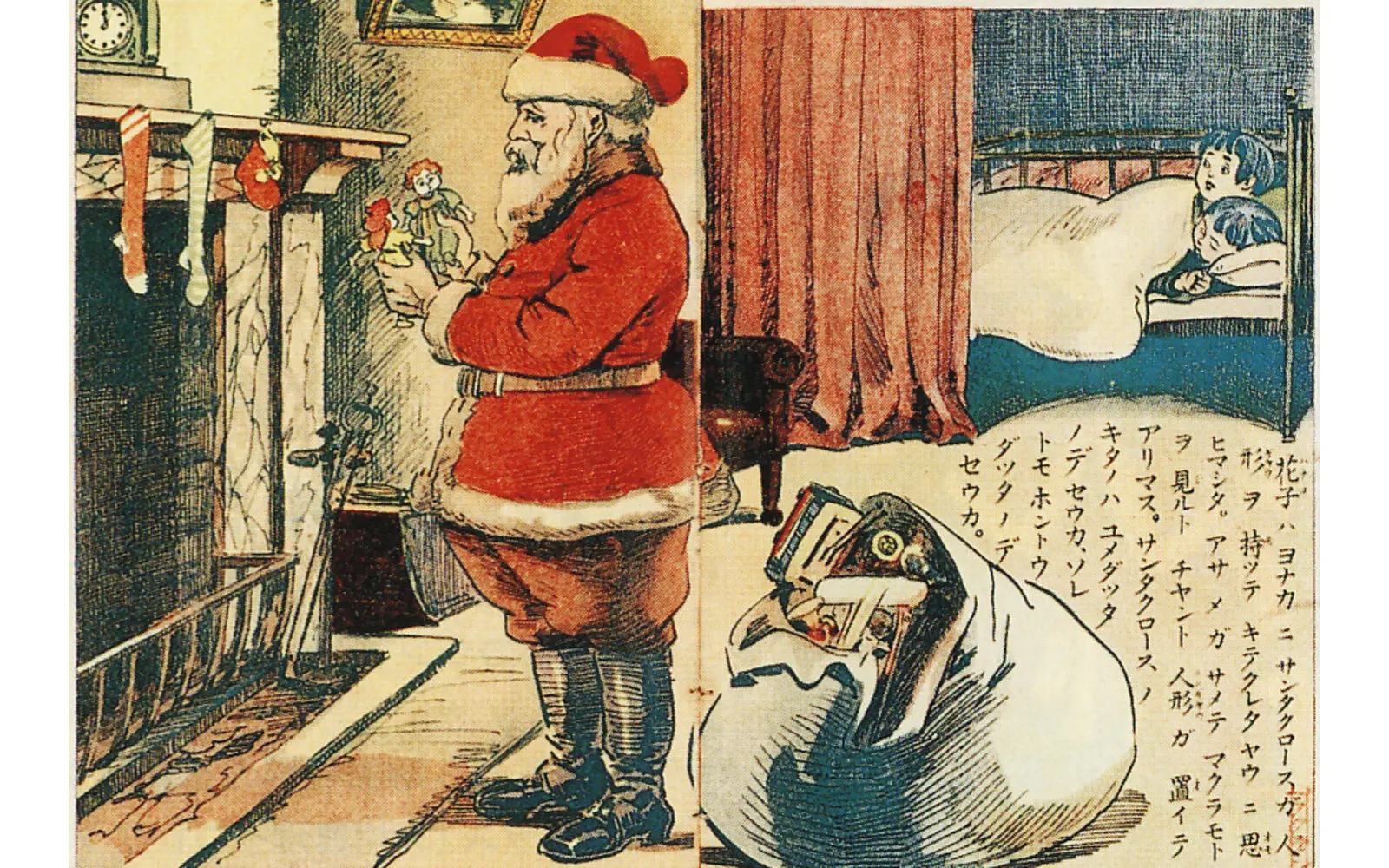
Once, gifted people would appear and write Christmas songs, poems, short stories and tales. Once, everyone would run to the churches to hear the wondrous hymns of the Nativity, and wishes were exchanged through visits to friends and relatives, in the countryside and at festivals. Now wishes, stereotyped, tedious and soulless, circulate on the internet. Some are printed, identical and unchanged, on cards that rarely travel by post or courier. Even these have become brief, hasty wishes, so we can finish with the “obligation” and sink again into tasteless everyday life.
Once, at Christmas, the whole family gathered around the table after the days of fasting and churchgoing, and wishes full of life and warmth became reality, changing into smiles of joy, radiance of love and the warmth of affection. Hatreds, enmities, cares and every sorrow stepped aside because Christ was being born in our hearts and in our lives, and the Christmas feast gave strength for the present and the future, blessing and optimism, fruits of goodness and kindness.
Yet even today quite a few people remain who long for the lost feast of Christmas as it once was, in our childhood years. Without many little lights and with very few decorated trees, but with an atmosphere that smelled of celebration. With homes fragrant from homemade sweets, which are now bought at high prices from pastry shops, bakeries and bakehouses, with festive gatherings of relatives and friends, with family excursions, joys and carefreeness.
For them, it is worth trying to revive the great feast of Christmas. To give up the many useless things and embrace the few beloved ones. To forget, even for a little while, the economic crisis, the struggle for survival and our many insecurities, and to remember those who once kept us company with their presence and love, but who are no longer with us.
To approach old, forgotten friends, isolated relatives, people who, unlike us, do not even have the basics for their life. To give from the abundance of our love whatever we can, and if we cannot, then to offer a smile, a warm embrace, a few words from the soul.
To do everything possible so that we may feel Christmas as a feast: by visiting sick children, families that suffer more than we do, the neighbor who has drifted away, the hurting person who has remained alone. To join our feelings and love all together, so that we may celebrate true Christmas.


Comments
Share your thoughts about this article.
No comments yet. Be the first to comment.
Submit a comment