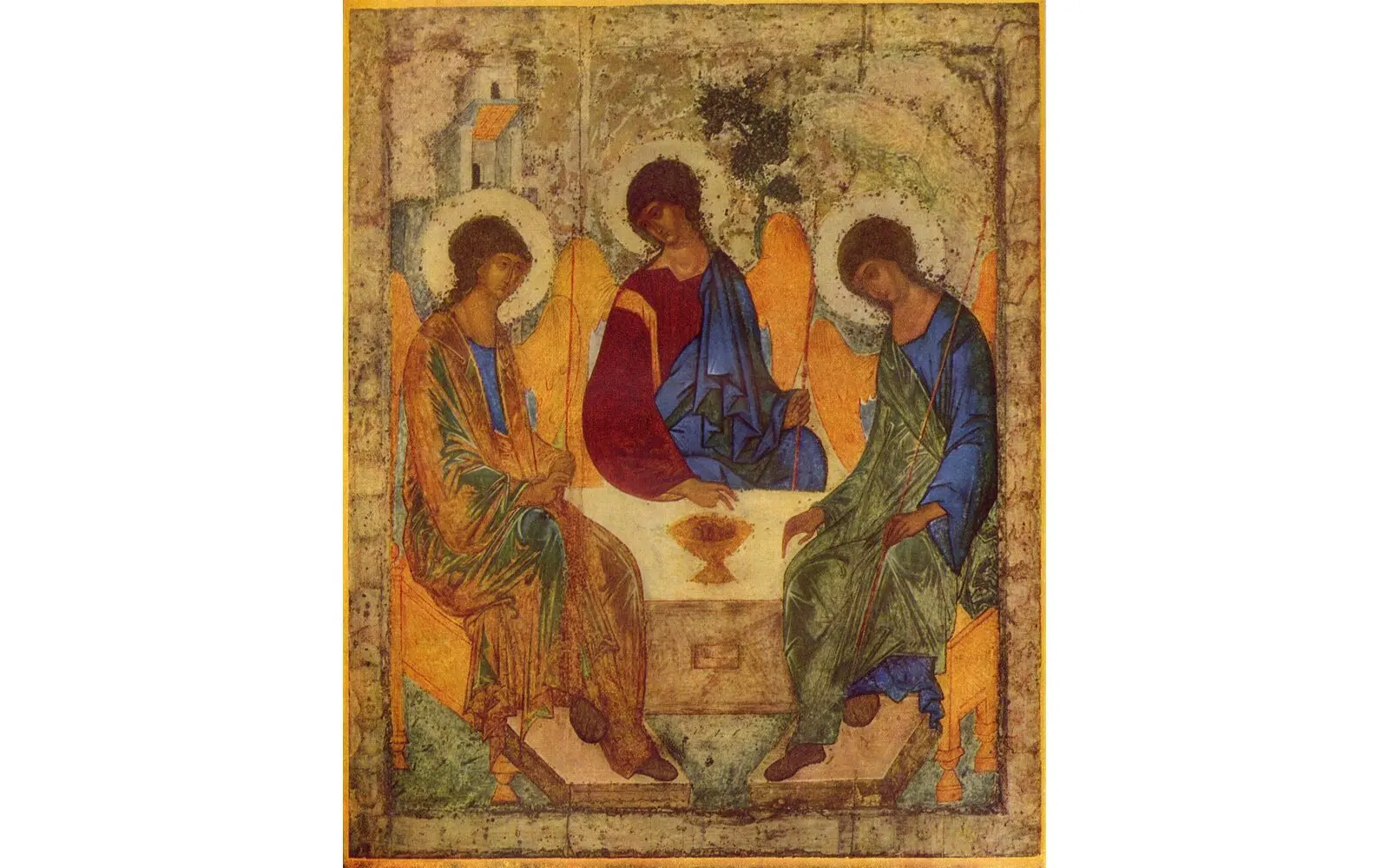
Archival note: This text comes from the older archive of Nomika Epilekta and is preserved with editorial care for historical and informational reading.
Art moves and delights us. Of particular interest, however, is the way works of art are conserved and rescued, a demanding technical science that is still not widely known.
For this reason, this brief informational note presents the conservation of Byzantine icons by Marina Avgerinou, conservator of antiquities and works of art.
Conservation of Byzantine icons
The conservator of works of art and antiquities is responsible for the technical examination, preservation and conservation of our cultural heritage.
In practice, a preliminary examination comes first, so that the importance of an object, its original structure, its materials and the extent of its deterioration can be established. Measures are then taken to slow down or prevent further damage, followed, where necessary, by restoration through intervention in the structure of the object. The conservator also monitors the environmental parameters of the place where the work is displayed or stored, namely the microclimate and especially temperature, humidity and the radiation it receives. This monitoring is a form of preventive conservation.
The purpose of conservation interventions is to reveal the aesthetic and historical value of icons. These interventions must not affect or alter the form and structure of the icons.
All conservation and restoration work must be carried out by specialists and only when it is considered necessary. The responsibility of the conservator is considerable, because the work is performed on irreplaceable, authentic objects, often of great historical, artistic, religious, scientific or economic value. This requires documented knowledge of the nature of the object. There are also rules governing the profession of the conservator. First comes respect for the authenticity of the work: the least possible intervention, preservation of the patina of time and no personal additions for merely aesthetic reasons.
The aim of aesthetic restoration is for the work to regain its aesthetic unity without its aesthetic character being altered. Any chromatic reintegration judged necessary must remain discreetly distinguishable from the authentic work. Such interventions are made only in areas where the paint layer has been lost and must not cover the original painting. Every method used in the conservation of works of art must be reversible, meaning that the materials used should be removable.
The main causes of deterioration in a Byzantine icon are the environmental parameters already mentioned, biological agents such as bacteria, fungi and insects, and also incorrect choices in the construction materials of an icon.
An important factor of deterioration is human action itself, through poor storage and handling of icons. Interventions by people who are not properly trained for this purpose, as well as the use of unsuitable materials, can often cause irreversible damage.
Fluctuations in relative humidity are responsible for a large number of damages. The materials used in icons are hygroscopic. During periods of high humidity, the work absorbs water and the materials swell; during dry periods, it releases moisture and shrinkage follows. Each material reacts differently to these changes, causing warping, cracking, flaking, detachments, weakening of the materials and even their powdering. The construction materials of icons, especially the ground layer containing animal glue, also provide a nutrient substrate for microorganisms. Microorganisms usually develop where relative humidity exceeds 65% to 70%, especially in combination with high temperature, darkness and inadequate ventilation.
When a work is kept in an environment of high humidity or is hung on a damp wall, fungi develop and, through hydrolysis and enzymatic decomposition, colored stains, discoloration, weakening and decomposition of the work's construction materials may appear. In such cases, methods are applied to prevent further deterioration and to restore part of the original properties of the preparatory materials.
For the consolidation of the wood, the ground layer and the paint layer, natural and mainly synthetic resins are used, such as acrylic and vinyl polymers. Natural resins are usually of animal origin, such as rabbit-skin glue.
The effect of solar radiation, as well as artificial lighting, can have destructive results for icons. Infrared radiation raises the temperature of the work. Strong sunlight, with its ultraviolet radiation, accelerates physicochemical reactions, leading to weakening and alteration of colors. UV screens and absorbers are used for protection, and it is also important to avoid camera flashes.
In addition, pollutants in the atmosphere can damage a painted work. Such pollutants include dust, soot, microorganism spores, sulphur oxides, carbon oxides, nitrogen oxides and others. Most gaseous pollutants, under the influence of moisture, are converted into corresponding acids, which weaken the materials from which icons are made. A large proportion of these works are found in churches, where the excessive use of candles and other sources of soot creates dark deposits with destructive effects. Cleaning methods for the painted surface, used against pollutants, oxidation and deposits, include organic solvents such as acetone, ethanol and turpentine, as well as chemical cleaning that makes use of reactions between pollutants or oxidized varnish and a chemical reagent or enzyme. Chemical cleaning is accompanied mechanically with a scalpel.
Attack by insects, woodworm and termites is another serious factor of deterioration. The presence of wood-boring insects is detected from exit holes on the surface of the wood, from powder falling from the affected wood and from the dull sound made by larvae as they consume the wood. In Greece, the most common insect family attacking the wood of icons is Anobiidae. Softwoods from coniferous trees, such as pine and cypress, are more easily attacked, while hardwoods such as walnut and oak are less vulnerable. The biological cycle begins with eggs being laid in cracks or cellular cavities. When they hatch, larvae appear, bore into the wood, open galleries and leave their droppings. The larvae become pupae and then adult insects, beginning a new cycle of activity. This activity is favored by high temperatures and dryness. For disinfestation, chemical preparations are used by coating, spraying, impregnation through immersion, or injection into the exit holes of the insects.
After conservation work has been completed, the surface is protected with a natural or synthetic varnish that must meet the appropriate optical and physical requirements. The varnish makes the surface water-resistant and protects the painted layer from environmental and other causes of deterioration.
At this point, the need for interdisciplinary cooperation should be emphasized. The conservator must work with other specialists, including archaeologists, museologists, researchers, engineers, scholars, architects and chemists. The analytical and research conclusions of these other specialists complement the conservator's work.
For the good preservation of an icon, the following should therefore be observed:
- Suitable and stable environmental conditions must be maintained. Relative humidity should not exceed 60%, and temperature should remain at 18-20 C.
- The work must not come into direct contact with sunlight or high levels of ultraviolet radiation from artificial sources; lighting intensity should not exceed 150 Lux.
- Direct contact with bare hands should be avoided, so that dirt and oily substances are not transferred, as should contact with painted lips, because chemical ingredients from lipstick may be transferred.
- Dust should be removed regularly with a dry cloth only.
- Storage and display should be kept away from sources of heat and moisture.
- The space should be systematically checked for activity by wood-boring insects, and already affected furniture or icons should be removed.

Comments
Share your thoughts about this article.
No comments yet. Be the first to comment.
Submit a comment