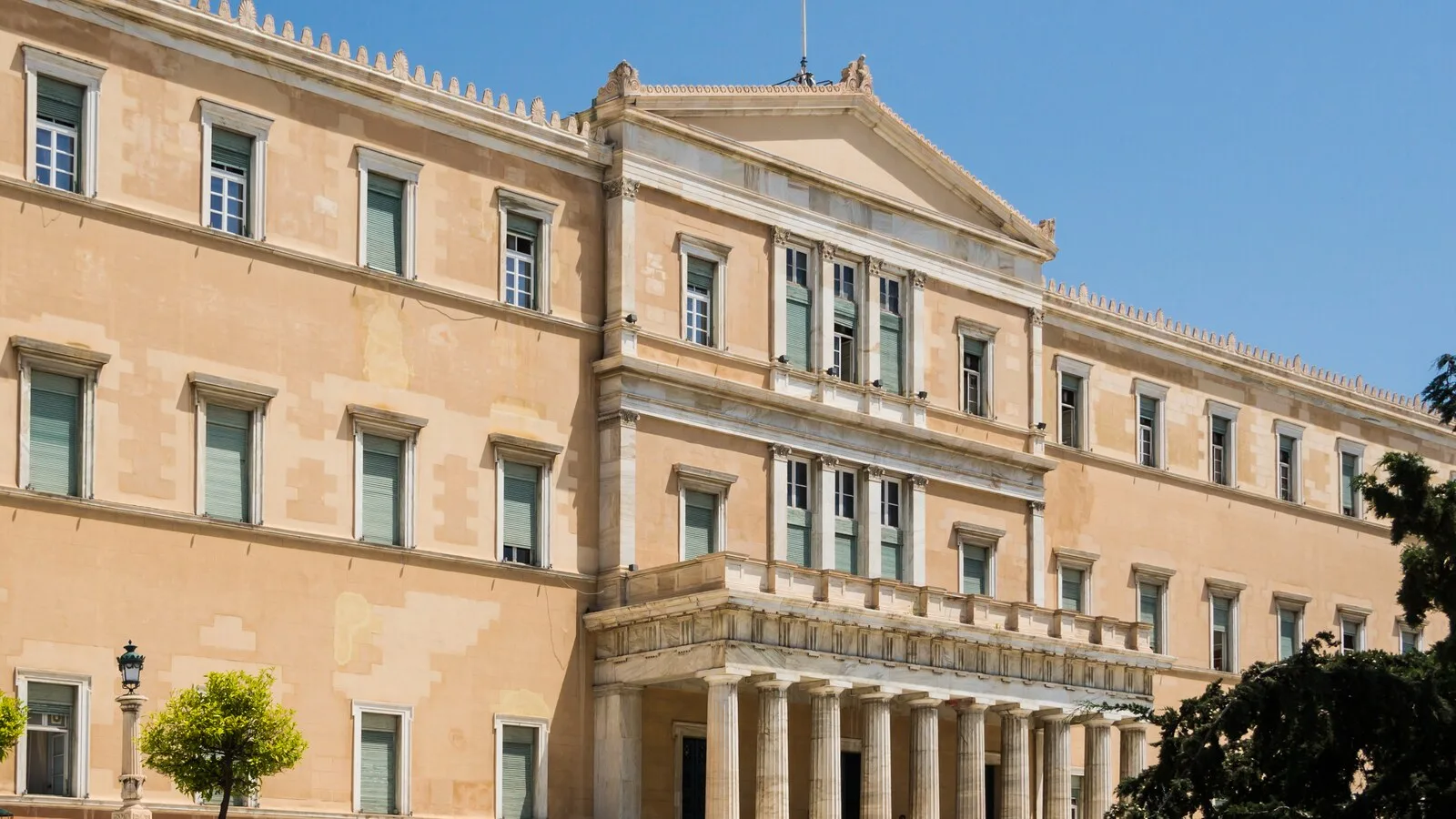
The modernization of the party-political system must begin with Parliament. It must begin at the temple of democracy, which the representatives of the people have too often allowed to become a service for arranging favors and appointments for their own circles.
The recent history of Parliament shows that, from the restoration of democracy onward, its expenses expanded as the years passed. This happened with cross-party consent. But the state went bankrupt. Therefore, parliamentary spending must be reduced substantially. The public cannot be impoverished while Parliament remains wasteful.
The modernization of Parliament should begin with a change to its rules of procedure, because those rules have created room for patronage and more. The temple of democracy sometimes operates as an example to avoid, when it should operate as an example to follow.
All changes should aim to return Parliament to the size and cost it had after 1974. Among the necessary measures are, indicatively, the following.
First, Parliament needs a new organizational chart for its administrative services. The reorganization of the state ought to begin with the reorganization of Parliament itself.
Second, the staff of Parliament must be reduced drastically. The total number of employees should not exceed three hundred. Anyone who disagrees should compare the staffing of the Hellenic Parliament with the staffing of comparable parliaments abroad.
Third, the special salary treatment of parliamentary employees should be abolished immediately and they should be included in the unified public-sector pay scale. It is hard to justify why these employees should enjoy a separate and scandalously favorable treatment.
Fourth, parliamentary employees should be appointed through ASEP competitions and not by party, patronage or clientelist criteria.
Fifth, all parliamentary services should be gathered in the central building and unnecessary services should be abolished. Parliament reached the point of renting almost all surrounding buildings.
Sixth, every service that resembles a hotel or private business, such as a parliamentary gym, should be closed.
Seventh, public funding for all foundations of former presidents and prime ministers should be abolished. Whoever wishes may fund such institutions privately, with transparency.
Eighth, the entourages provided to former prime ministers, former presidents of Parliament and similar officials should be abolished. As a matter of honor, only one employee may be assigned to assist each former office holder.
Ninth, the countless advisers and associates must end. Apart from the prime minister, each member of government should have no more than seven associates, and each member of Parliament no more than two. The era of entourages must end.
Tenth, the state subsidy to political parties should be reduced drastically. Tens of millions of euros can be directed to socially useful activities rather than party bureaucracy. If parties need money, they should seek it from private sources, always with transparency. Black money in politics is unthinkable and must be condemned.
In addition, Greece needs a real, not fictitious, declaration of assets. Everyone elected to office - members of Parliament, regional governors, mayors, trade-union representatives and others - should declare all movable and immovable property before assuming duties and again at the end of the term. During the term, their wealth should not increase even by one euro without full lawful justification.
Similar rules existed in ancient Greece. Those who assumed public office underwent scrutiny before, during and after their term. As descendants of the ancient Greeks, we can adopt such rules now.
The progress of society requires modernization of the party-political system. Society is not expressed by every political opportunist, populist or party-appointed trade unionist who invokes it. These actors are instruments of the party-political system, often among its most reactionary parts. Society consists of the people, and it is the people who must be served.



Comments
Share your thoughts about this article.
No comments yet. Be the first to comment.
Submit a comment