Archive note: This text comes from the old archive of Nomika Epilekta and is preserved with care for historical and informative reading.
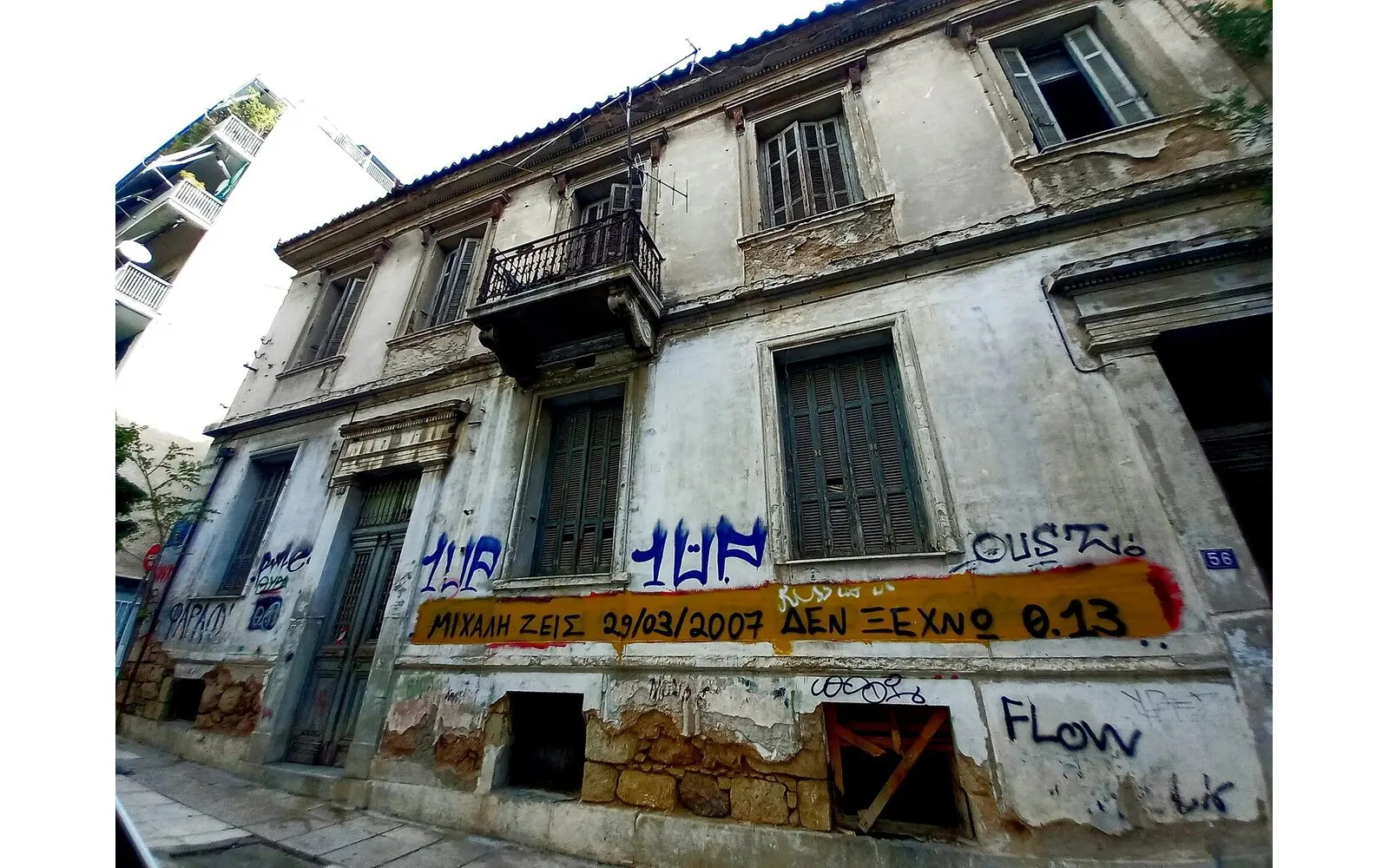
In light of the sad events that took place in the centre of Athens and their destructive effect on the image of the city centre, with burned and damaged neoclassical listed buildings, this is an occasion to look again at the history of Athenian architecture and at what remains of it. The term neoclassicism describes a major cultural movement that spread widely through Europe in the late 18th and early 19th centuries. It is connected with the interest in classical antiquity stirred by the excavations associated with Johann Joachim Winckelmann at Herculaneum and Pompeii. In Greece, neoclassicism coincides with the arrival of the first Bavarian prince, Otto, and its influence reaches as far as the interwar years. The ancient buildings and ruins that survived served as models and objects of study, living examples that shaped the aesthetic memory of Athenians. The wish to cast off the remains of Ottoman rule also contributed to the dominance of neoclassicism. An architectural current born in the West returned to the land that had first nurtured it. In the particular conditions of Greece it acquired its own personality and became modern Greek neoclassicism. Neoclassical houses stand out for their rich decoration, luxury, costly materials and generous spaces. The presence of ancient Greek stylistic elements, together with a sense of measure and harmonious proportions, defines neoclassical architecture.
On 3 February 1830, in London, the protocol recognizing Greece as an independent and free state was signed. Even so, the Turks did not leave Athens immediately; they still held the Acropolis, which they surrendered three years later, in March 1833. Three months after that, the decree naming Athens the capital of the Greek state was signed. The movement of neoclassicism in Greece arrived at the right moment, ready to proclaim and embody the rebirth of the ancient Greek ideal in a country trying to rise again from its ashes. The condition of Athens at that time was tragic, and so a vast effort of planning and building began. The first important neoclassical project was the urban plan of Athens by Kleanthis and Schaubert, which was eventually applied with several modifications. Many buildings and churches survive today, while numerous private houses were demolished during uncontrolled post-war reconstruction. Among the most important buildings left by the neoclassical movement are the University, by Christian Hansen, the National Library and the Academy of Athens, works by Theophil Hansen. These buildings are distinguished by the completeness of their proportions and their sculptural decoration. Other important buildings include the Polytechnic complex by Kaftantzoglou, the old palace building by Gartner, the Zappeion Hall by Boulanger and Hansen, the Arsakeion by Kaftantzoglou, the Observatory by Theophil Hansen, the Makrygianni military hospital, the Archaeological Museum on Patission Street and the Old Parliament by Boulanger.
The figure who stood out in the period of neoclassicism was Ernst Ziller, who lived in Greece for many years and produced the largest number of buildings. He emerged as a poet of neoclassical architecture. His works include, among others, the mansions on Herodou Attikou, Iliou Melathron, the National Theatre and the building that housed the Attikon cinema, which was recently burned by hooded vandals. The architects of neoclassicism did not hesitate to adapt religious architecture as well to the broader spirit of the age and to create new forms of churches. Neoclassical churches are original works, with a new understanding of the interior space of worship. A characteristic example is the Metropolitan Cathedral of Athens.
By the threshold of the 20th century, Athens had acquired the appearance of a European capital. Neoclassicism became widely accepted and prevailed not only in public buildings but also in urban and popular houses, giving the city a distinct character. Vernacular architecture was also enriched with elements inspired by neoclassicism and, despite differences in quality, the use of humbler materials and the simplification of forms, it adorned the city with unique buildings. Greek architects, together with ceramic craftsmen, moved dynamically and created the popular neoclassical house, freed from the heaviness of European baroque. Clay was used instead of marble, copying pilaster capitals, anthemion antefixes, small parapet columns and statues, elements that marked an entire era.
The antefix is a hallmark of Greek neoclassical architecture. The picturesque tiled roof with rows of antefixes, terracotta crowning and other decorative ceramics forms the familiar face of neoclassical houses. We see them decorating the roofs of small houses in Athens and in other urban centres of Greece. Neoclassical and neoclassicizing buildings bridge the pre-revolutionary period with the rebirth of the Greek state. Their architecture teaches harmony between facade and plan, enriched with varied decoration. Greece and its citizens spent enormous sums for the standards of the time in order to adorn the capital and the regions with buildings, sculptures and works worthy of the art and culture of their ancestors.
The need to house the population that inevitably gathered in the capital affected the image of Athens through the development of the urban apartment-building model. The year 1929 is considered a milestone in the evolution of the city apartment block. A law was introduced promoting the institution of horizontal property; in other words, the first apartment owners appeared with co-ownership rights over the entire plot, whereas until then there had been one owner for the whole building. At the same time, the system of antiparochi began, under which the contractor financed the whole construction in exchange for granting a percentage to the landowner. These changes had a major effect on the morphology of buildings and led to their standardization, while in the pursuit of profit, meaning reduced costs and therefore reduced quality, construction was driven into decline. Thus Athens today presents this unattractive image, with the Acropolis and what the neoclassical movement left behind as its only ornaments. Even so, some seem determined to flatten the city and whatever beauty it still has to show, especially at a time when Greece needs beautiful images both for Greeks themselves and for foreign tourists or observers.



Comments
Share your thoughts about this article.
No comments yet. Be the first to comment.
Submit a comment