Archive note: This text comes from the old archive of Nomika Epilekta and is preserved with care for historical and informative reading.
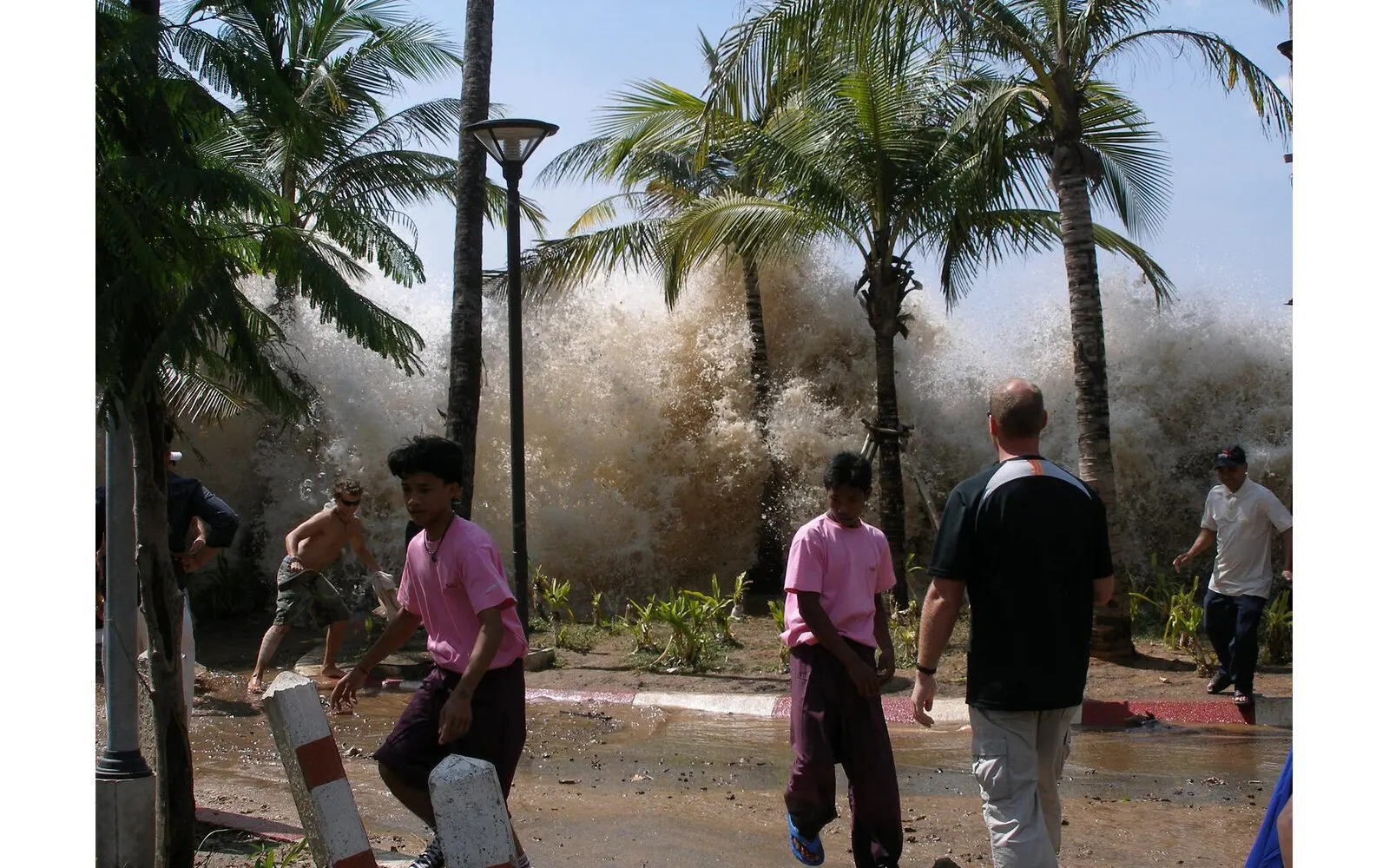
It was 2004 when the tsunami suddenly drowned Indochina. A few years before the “crisis” broke out. While others were dying, we were celebrating with borrowed money. At that time some thoughts were set down, and they still apply today, amid the crisis and economic hardship. Back then I thought that, that year, Christ and the tsunami had been born together. Christ in the traditional manger, as every year; the tsunami unexpectedly in poor Indochina. The number of the dead was unknown. Wherever there is poverty, fate follows. Those who drowned believed in other Gods too. Unfortunately for the victims, Christ was celebrating his birthday and the other Gods, as it turned out, had gone on holiday. And yet so many people drowned in a few hours. All those who were lost or injured prayed in temples, offered gifts to demanding Gods who, unfortunately, despite pleas and prayers, are not beside you when you look for them. Hope always dies last. The tragic irony and provocation is that animals and primitive tribes survived the deadly deluge because they listened in time to the pulses of the earth. They were saved without warning systems, through knowledge and faith in tradition. They survived thanks to their rare instinct for self-preservation. They lived by following the dogs and the elephants… Unfortunately, not even the tsunami makes the powerful, the merchants, or the priests break a sweat. They insist on forcing Christmas on us as a feast of love. They want to make us forget Iraq, Bush and the Third World, and make us all happy and cheerful. To go to réveillons, what a word that is. To shop with plastic money, with holiday loans. To eat and drink until we burst. To go and slim down at Bodyline, paying by credit card so that we can fatten up all over again by eating. An accordion system, in other words, or a vicious circle. The question, however, is how one escapes the “tsunami” of indifference, lawlessness and overconsumption. Is it possible, for example, to stand outside the development (?) and the “civilization” that will ultimately wipe out the planet? Can we resist, and how? Who, for example, can at Christmas: play cards with beans. Read Papadiamantis. Walk uphill through the fog to meet his friends and drink wine with them, eating cheese, olives and baked potatoes. Chant “today the Virgin gives birth to the Superessential One.” Then perhaps he will understand why Christ was born, what he would do if he came today, what the tsunami is, or after all whether “the shore is crooked or we are sailing crookedly.” Since the days when I sang carols barefoot on the cobbled lanes of my village and collected holed ten-drachma coins, much water has flowed through the rivers. Yet I can and want to remember those years with emotion and love. Those years when, holding a lalangi, a fried dough cake, in my hand and glass marbles in my pocket, mixed with ten-drachma coins, I walked down toward the school square to play with the other children on the wet earth until dusk. Then, sitting on the low stool beside the hearth corner with the burning logs, I warmed my feet and hands until they developed chilblains. I ate hungrily a charred slice of bread with salty cheese from the skin bag. I listened to the stories and jokes of the grown-ups while playing king or take-all. Then the bells rang, calling us to church to hear “Your Nativity, Christ our God, has shone upon the world the light of knowledge…”. My village church, carved in marble and imposing, with tall stone columns and Byzantine domes, invited you to metaphysical escapes and wanderings far from the stern God and the Saints who never laugh. The candles, with their weak trembling light, illuminated the inside of the church and the figures of the faithful, who kept expanding and contracting, forming shapes from paintings by El Greco. The priest was eager and gold-embroidered. The chanters were ascetic and talkative. The troparia and apolytikia followed one another monotonously, melodically. I remember being hungry because I was fasting. Even so, I made prostrations under my grandmother’s sleepless gaze and could hardly wait for the liturgy to end. When I reached home I ate the warm food my mother served on the low table. Later, as a primary-school “graduate,” I dressed as an altar boy, what a distinction that was. I remember then eating prosphora secretly, in front of the Prothesis, while the priest read the Gospel according to Matthew before the Royal Doors. Today’s Christmas with statistically controlled tables — this year the Christmas table will be 10% more expensive — is meaningless and standardized. It simply makes me melancholy and forces me to hide or flee until the cheerful (?) festive (?) “tsunami” settles down, leaving behind extra kilos, higher credit-card instalments, and souls empty and plaintive. But back then, the tsunami was far away, in Indochina…

Comments
Share your thoughts about this article.
No comments yet. Be the first to comment.
Submit a comment