Archive note: This text comes from the old archive of Nomika Epilekta and is carefully preserved for historical and informational reading.
Has anyone wondered whether members of parliament have ideology, consistency, principles, ethos, abilities, and knowledge?
The occasion for this question was given by the deletion of two members of parliament, A. Georgiadis and M. Voridis, by the president of their party and their lightning-fast relocation to a stronger party.
We remember such movements of members of parliament, which were countless, together with a simultaneous change in the convictions of those relocating.
Is relocation permitted or prohibited by law? Is it moral or excluded by rules of ethics? Is it intelligent or foolish? How can one judge parliamentary relocations or, more generally, the movements of political actors from party to party, and also from ideology to ideology?
Neither the law, nor morality, nor any other obstacle excludes the movements of members of parliament, who are elected to serve the general interest and not their party or splinter party.
On the contrary, the member of parliament and the person exposed as a politician have the right to move, to change party, to relocate, even to change convictions, if their conscience and judgment dictate that this better serves the whole and the nation.
Members of parliament do not serve those who voted for them, but all citizens and society.
From this perspective, the relocation of the members of parliament from the right-wing party to the center-right "New Democracy" is neither unlawful nor even immoral.
The two members of parliament, who subsequently resigned their seats, had the right, after their deletion, which triggered their departure from the party "LA.O.S.", to move and relocate to the larger party.
After all, these right-wing politicians, by casting a positive vote in favor of the so-called "new memorandum" for borrowing from Europe, aligned themselves with the party to which they relocated, and one cannot reproach them for that.
However, questions, doubts, and thoughts arise concerning the mentality prevailing in the country.
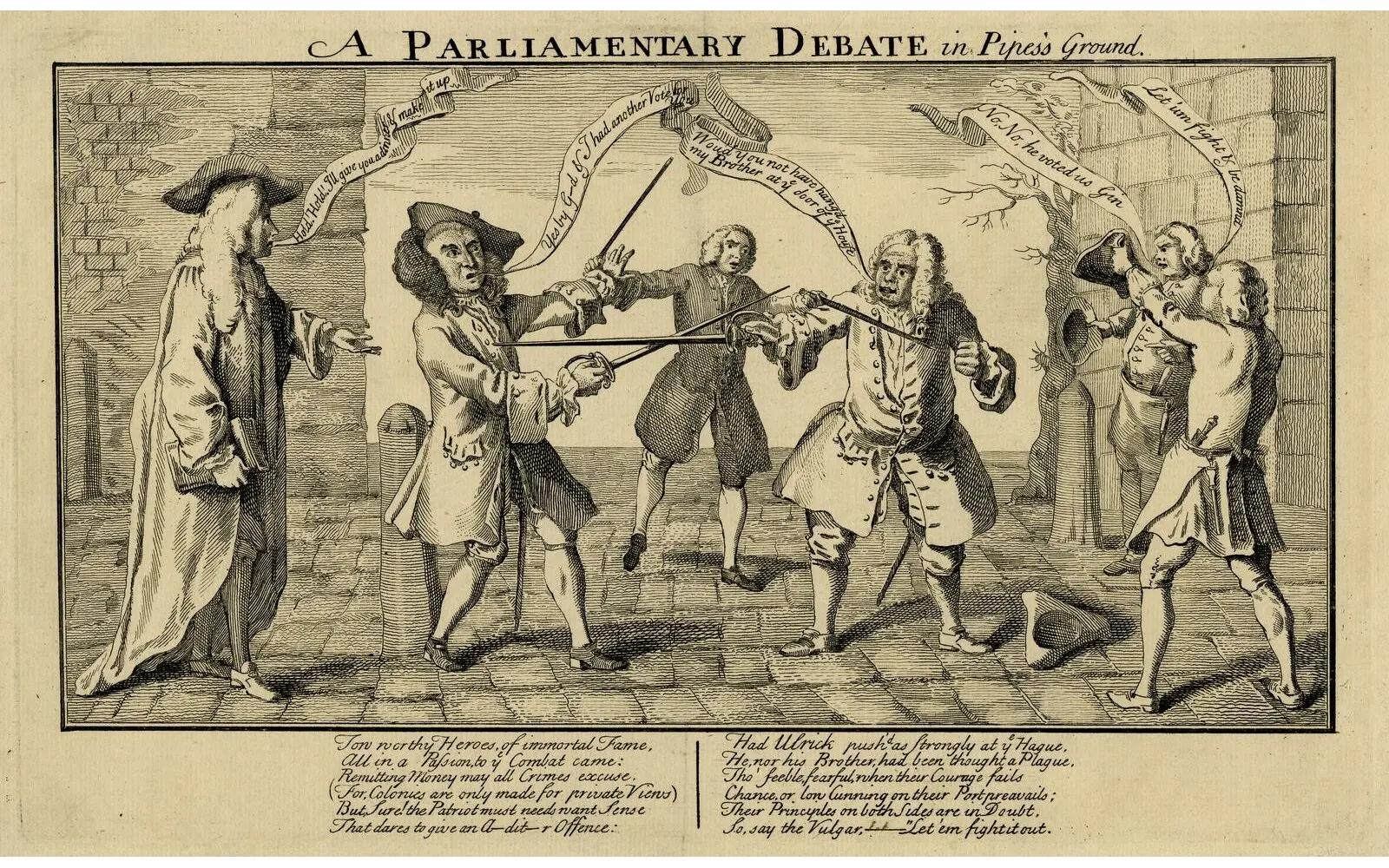
The immediate, lightning-fast deletion of the members of parliament by the party leader or president, without a hearing, is not a democratic act, because it makes clear that parties continue to be personal enterprises, and not organizations, owned by their founder or leader. They are not ideological formations.
A party leader has absolute power concentrated in his person and, like another monarch, feudal lord, or tribal chief, accepts, expels, deletes, approves, punishes, and directs his collaborators, members of parliament, candidates, and party members without being accountable to anyone.
In other words, every political party resembles a private enterprise belonging to its leader or president and perhaps to a circle or group of persons who enjoy the fruits of their party affiliation.
The example of the immediate deletion of the two members of parliament together with their simultaneous recruitment by another party raises concerns about the quality of politics in the country, our institutions, and our customs.
This concern can be explained by the thought that the two deleted men, because of their positive vote, and the two relocated men, thanks to their positive vote, had been the most prominent politicians of the party from which its founder deleted them without a hearing.
By decision of their party president, the two deleted and relocated members of parliament had been appointed, one as deputy minister and the other as minister, in the government of our national banker.
Both supported to excess the positions, choices, and decisions of the party that had promoted them and launched extremely sharp attacks against the other parties, targeting as a priority the party they joined after their deletion.
They considered the party that welcomed them to be the source of evil, the main cause of the destruction of the economy and the humiliation of the country, without programs, without principles, and without ideological foundation.
By contrast, they regarded the party from which they were kicked out, with fists and feet as the saying goes, as a source of wisdom, true patriotism, ethos, successful proposals for exiting the crisis, and virtue. For that reason they supported it excessively, even with extreme statements and populist displays.
Thus the question is reasonable concerning the ability but also the right of a politician to change suddenly and radically his views, positions, and even ideology.
How is it possible, while supporting with devotion, faith, and one's whole being one political formation, and opposing absolutely and extremely another, to join the one that until recently one harshly criticized, and to criticize the one that a few seconds earlier one supported with zeal?
For these schizophrenically opposed positions to be reconciled, the element of logic, balance, morality, honor, and sound judgment must be absent.
Above all, a person behaving like the two deleted and relocated members of parliament must have no regard at all for the citizens to whom he addressed himself, addresses himself, and will address himself for his election and reelection...
Because if these politicians respected citizens, they should, through consistency, prudence, virtue, speech, and example, inspire the governed, the citizen-voters who are the final recipients of the policy being exercised, which must be a policy of ethos, principles, ideas, and virtue.
In other words, the expulsion of the two members of parliament would have been legitimate and democratic only after dialogue with the competent party officials and after an explanation, or at least a defense, concerning their positive vote for the second memorandum, contrary to the view or "line" of their party president. Only if that explanation or defense were judged by majority vote to be unsatisfactory would there have been justification for deletion and expulsion.
The immediate deletion of the members of parliament, without observance of the principle of hearing, by the sole decision of the party president, does not accord with democracy and has nothing to do with civilization or the virtue of equal speech. This conduct belongs among the acts committed, in the past and present, by absolute rulers, formerly tyrants, monarchs, feudal lords, and dictators.
Likewise, the immediate, direct, and dialogue-free entry of the expelled members of parliament, because of their vote, into the larger party that only minutes earlier they criticized, disapproved, and condemned, contains elements of schizophrenia as specialist physicians define it, or, in the worst case, elements of complete contempt toward the citizen and public feeling.
Conclusion: both the instantaneous deletion of the members of parliament, as if they were pupils who had shown disgraceful conduct, and their equally instantaneous admission into the other party that they previously condemned, in every tone and even with vulgar or extreme descriptions, constitute what the Greeks called hubris: violent, insolent, and arrogant behavior.
Hubris was a violation of the moral order and an attempt to overturn social balance, which ultimately led to the fall and destruction of the offender himself.
In this case, tolerance of the offenders, wherever they belong, has led to the tragedy we are living through; and repetition of hubris will destroy not only the offenders but the whole of society, because through this endless tolerance institutions are undermined, social conscience is worn down, and long-suffering democracy deteriorates...
E. Papadakis


Comments
Share your thoughts about this article.
No comments yet. Be the first to comment.
Submit a comment