Archive note: This text comes from the old archive of Nomika Epilekta and is preserved with care for historical and informational reading.
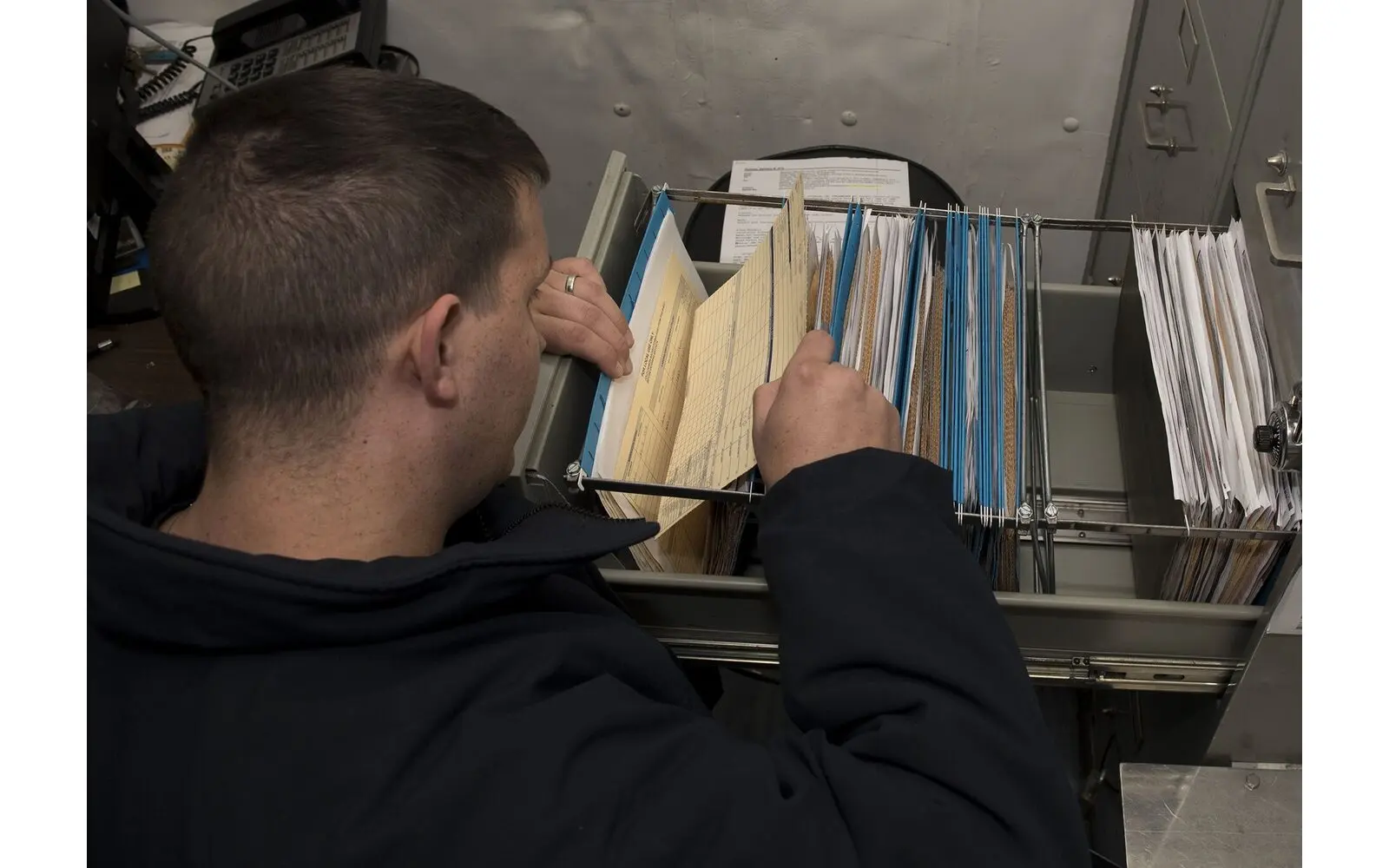
Modern Greece not only perpetuates the Ottoman principles of governance, “organization” and Ottoman culture more generally, but has contributed internationally more than Turkey to the spread of that culture. Moussaka, tzatziki, dolmades and bouzouki became known worldwide not from the Turks, but from the Greeks, especially the Greek restaurants opened by migrants in western Europe, America, Canada, Australia and elsewhere. Of course, in our internal consumption of ideas, the prevailing view is that the aman, the nasal chants of the church, karsilamas and Karagiozis are all Greek things that easterners took from us. These things may pass among ourselves, but if you say them to a northern European, he will certainly be surprised. What is interesting is that today Turkey looks westward and modernizes, while we look eastward and show furious resistance to progress (the word “progressive” has become a reheated label that simply indicates which political space you belong to). For example, Turkey had three social insurance funds, which Erdogan merged into one. We had 134 such bureaucracies, if you please, and when the government tried to consolidate them not into one, but into about ten, the whole universe rose up and Athens nearly burned. One could, of course, object that with 134 insurance funds there is more competition and, presumably, better quality of services. Nonsense! Has anyone seen anything like that? The only competition that exists is over which fund will be more bureaucratic, so that you go to the pharmacy with your prescription and serious, hard-to-solve issues arise, such as whether the health booklet was validated and whether the stamp was triangular or square. What amazes both foreigners and Greeks abroad is how horrific Greece’s bureaucracy is, which one already encounters in consulates and embassies. This hyper-bureaucratic spirit is so nightmarish and so inconceivable, not to mention that it keeps increasing instead of decreasing, that it is worth writing a separate book dedicated to the improbable scale of human stupidity... And this spirit is not focused only on papers and stamps, which are considered more important than anything else in life (except perhaps football), but is an entire Byzantine-Ottoman mentality, appearing vividly before you in all its glory and upsetting every sense of logic and every natural instinct within you. Suppose, for example, you are in Skopje and go to the consulate for a document certification (really, why are so many certifications needed?). It is the year 2003, and Greece has already had the euro as its official currency since the beginning of 2002. They receive you with the familiar spirit of strict ritual, with their reluctant curt answers and the familiar grim expression, and in the end they ask you to pay for the certification. Then comes the surprise of your life: They accept only U.S. dollars (!!!) and, moreover, you must have the exact amount, because they do not give change - at a time when everyone in Skopje, even the grocers, accepts euros, the official currency of Greece! A local coffeehouse owner, opposite the embassy, understood that this rigidity was an opportunity to earn his bread, so he put up a large sign saying that he exchanges whatever currency you have into dollars and even into the exact amount requested by the consulate, for a good fee, of course. This example shows, among other things, the function performed by bureaucracy: to create and sustain parasitic activities, and in Greece we have whole armies of entire parasitic professions (for example, customs brokers) that exist only and solely thanks to bureaucracy. Surely the reason why the consulate regarded dollars as the only lawful currency for its transactions was that they had not yet received the relevant circular from Athens. But why is a special circular needed in order to accept the official and lawful currency of the country? What logic is this, perhaps from another planet? Imagine, of course, the ridiculous image of our country projected by that consulate - the only consolation may be that the Skopje authorities are not at all behind in such bureaucratic stupidities, so perhaps they show understanding... Incidentally, Greek governments have lately been boasting about the success of the Citizen Service Centers (KEP), although these too have begun to become just as difficult as all the other authorities; nevertheless, they certainly help with some things. They forget, however, that the very need for the existence of the Citizen Service Centers (KEP) shows how unacceptable Greek bureaucracy is, since a special service is needed to help you cope with it. Services of this kind, such as the Citizen Service Centers (KEP), began from the United Nations in countries such as Cambodia, to help poor and illiterate populations deal with the indescribable third-world bureaucracies in their countries. The fact that such services are needed even in a member state of the European Union is like an official certification of resounding failure. And so that we do not blame everything on the State and the politicians, everyone is complicit in the phenomenon of bureaucracy in Greece. Contemplating reality through papers and stamps, and not through the five senses given to us by nature, has now entered the genes of the modern Greek. In Greece you are tall or short not because you are truly tall or short, but because you have a paper (careful: stamped!) that certifies it. Your head may have the shape of a cement block or a pumpkin; nevertheless, if your identity card says it is oval, then it is oval. In the best case, we are talking about a legal fiction. In the worst, about artificial schizophrenia, where the five senses are annulled. If Kafka had lived in Greece and had seen Greek bureaucracy, he would certainly have written many more masterpieces than those he has already given us. For in Greece both the nature and the scale of the problem show a society that is like theater of the absurd, with a bureaucratic system designed to slow down and obstruct everything, especially every entrepreneurial or developmental effort. It would not be an exaggeration to say that the greatest problem in today’s Greek society is bureaucracy, which has now become a way of life (modus vivendi, lifestyle!) with its own logic and its own codes. This bureaucratic culture displays the following characteristics, for none of which should we feel particularly proud: FIRST, written certifications are required for everything, even for the most self-evident things. Those of us who studied law learned that in a trial one need not prove the self-evident, nor what is known to all. For Greek bureaucracy, however, you must prove at every moment that you are not an elephant. SECOND, the certifications of everything and stamp mania. For certifications, for example, we use the police. Instead of leaving it alone to perform its main duty unhindered, we burden it with completely unnecessary certifications of papers. As for stamps, the insistence on them is inexplicable, since nothing is easier to forge than a stamp. THIRD, papers, stamps and all these tools of the bureaucrat have passed into the subconscious of the Greek as sacred things with almost metaphysical value. The word “papers” in particular has a very important sound in the ears of the modern Greek, who uses an almost ecclesiastical vocabulary for these things: he “produces” the supporting documents, “submits” the application, and so on. Even those entrepreneurs who logically ought to be against bureaucracy turn out to have an inexplicable need to hang in their shop a heap of certifications, with stamps and seals, as a talisman or at least as decor. In the end, I believe that if the system changed and you could open your shop without licenses and papers, these entrepreneurs would feel that something was missing. FOURTH, bureaucracy is not only a matter of many papers, but also of an attitude that ranges between sadism and misanthropy. Sometimes the State manages to simplify things as far as papers are concerned. For example, the last time I obtained a birth certificate, I went to the town hall and the employee printed it immediately from the computer, without applications, formalities or other procedures. I would say faster and easier even than in Sweden. But during the few minutes the transaction lasted, the employee neither spoke to me, nor greeted me, nor looked at me, nor told me to sit down. Indeed, he had the good idea to pop into his superior’s office himself to have the certificate signed, but he did not inform me of that; in short, he was visibly annoyed by my presence. When I finally asked him something, he answered curtly that he was very busy. It should be noted that he was constantly speaking with the colleague next to him about private matters, entirely unrelated to his work... FIFTH, neither the services communicate with one another, nor even the different departments of the same service. To obtain a discharge from the hospital, you must make the rounds of the building yourself several times until you collect the required stamps and signatures. SIXTH, Greek bureaucracy seems to be indifferent to substance, to real reality, and to see everything through papers and stamps. To set up a waste transfer station, for example, a study is required. What that study will say and what its quality will be matters not at all. What matters is that it be submitted, stamped, smelled and “made official”. With these characteristics, Greek bureaucracy creates a terrible cost for the national economy, obstructs every kind of creative activity and favors corruption and fraud. The bureaucrats themselves claim that the harshness of their procedures is required in order to prevent fraud. Exactly the opposite happens! Fraudsters love papers and stamps because they manufacture them easily and do not need to concern themselves with substance. For example, in Swedish bureaucracy, which focuses on substance, for your other half to receive a residence permit, papers are not required, not even a marriage certificate. Quite simply, separate interviews of the two spouses will be conducted, with questions intended to determine whether you really are a couple and live together, and if the result is positive, the residence permit will be granted. In Greece any foreigner can relatively easily make a fake marriage and “produce” the certificate in order to settle his status. No questions asked. Let us take another illuminating example, the incorporation of a company. In Sweden you can incorporate a limited company by filling out a two-page form without any other papers, except one: a receipt from a bank that the declared capital exists in a blocked account. In Greece, incorporation of a public limited company or a limited liability company means months and months of paper-mapping, with lawyers, notaries, government gazettes and so on, but in the end the notary writes that the capital was counted before him (supposedly), and thus so many companies open without having the capital they declare. In other words, these companies begin their activity in a way that leads to defrauding creditors! That is, it is not many papers and complicated procedures that prevent fraud, but smart papers and smart procedures, and there we have a deficit. But has anyone seen a march, or a protest, against bureaucracy? Nor will you see one. Because there is almost no Greek family that does not draw its economic stability, and also the (false) sense that it exercises power, from bureaucracy, where at least one of its members is employed, if not more. Therefore, a revolution against bureaucracy would mean a revolution against ourselves, and that we are not going to see. We could, of course, see a revolution “from above”, if that government is found - or if the European Union or the economic crisis pressures us sufficiently - that will concern itself with abolishing bureaucracy. We have not seen such a thing to this day. We have seen only spontaneous television announcements about simplifying this or that procedure, but the issue requires systematic study of all procedures and a very tightly bound program. It is not enough to simplify company registration. One must also simplify the routine of companies, as well as their closure. As the system stands today, it could only be described by the phrase “do not get entangled”.


Comments
Share your thoughts about this article.
No comments yet. Be the first to comment.
Submit a comment