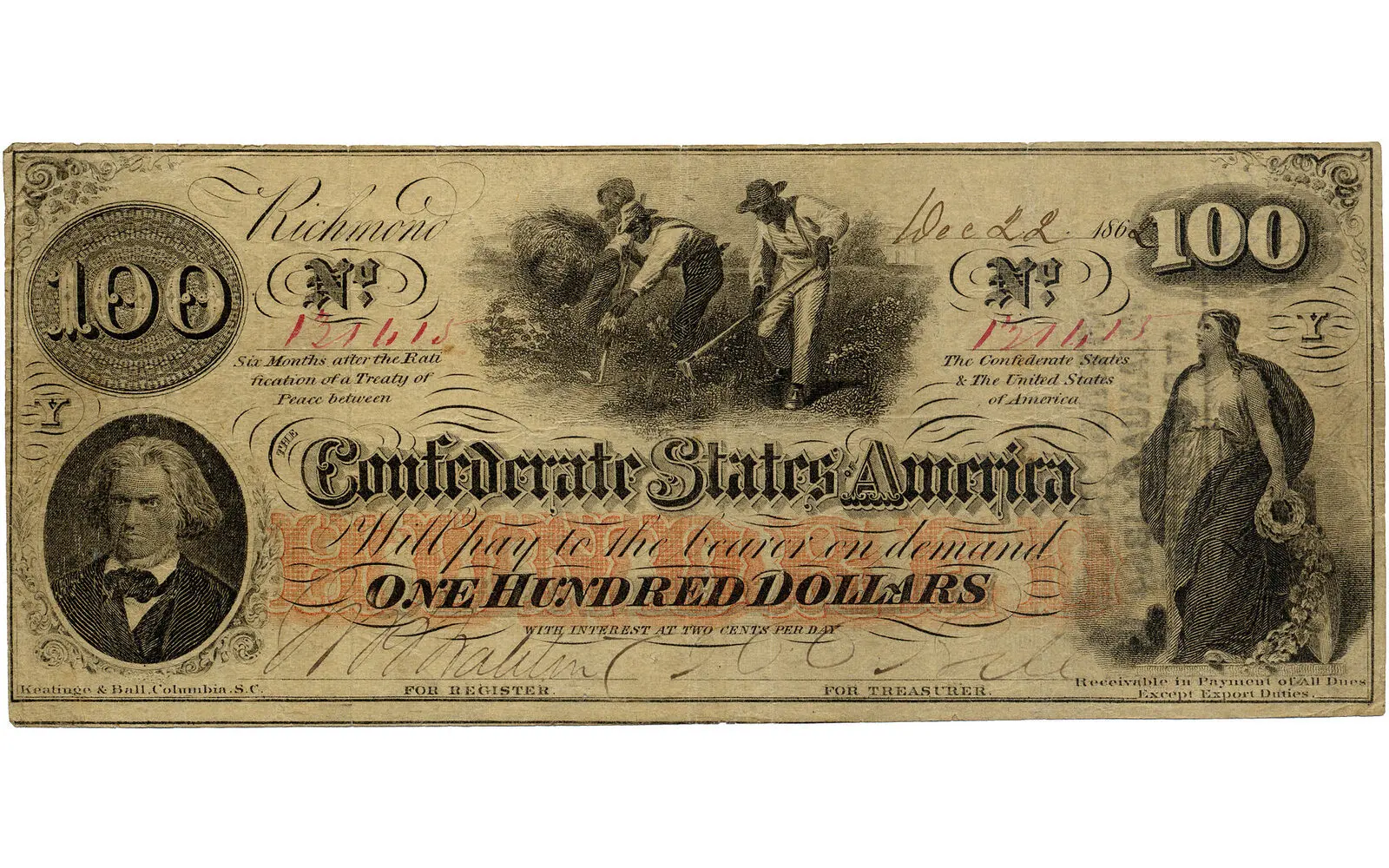
Archive note: This text comes from the old archive of Nomika Epilekta and is preserved with care for historical and informational reading.
Money has changed form and character many times during its long history. On certain tropical islands near Papua New Guinea, money is regulated by traditional customary law, which allows anyone to “print” their own “banknotes” on tree leaves, after a special and time-consuming process. In the USA, at the beginning of the independent American state, the dollar was issued by private banks until it was nationalized by Alexander Hamilton in 1792 (until then the dollar was the official currency only in the state of Virginia). The money we use in our country - and in the European Union more generally - is strictly controlled by state authority, which determines the currency in force at any given time as compulsory for transactions (legal tender), and is considered a movable and fungible thing under Civil Law. That is, when we borrow 100 euros, in repaying the loan we are not required to return the same banknote that the lender had given us, but the equivalent amount. This very fact creates certain problems, mainly of an evidentiary nature, in cases of prosecution for disposal of proceeds of crime, money laundering and so on. It seems, however, that these basic principles are changing in our time, with the rise of technology, especially “plastic money” (already in many European countries there are shops that refuse to be paid in cash and require a credit or debit card) - but also with the constant addition of new punishable acts to our criminal legislation. The entire legislation on money laundering is an eloquent example. This legislation is promoted internationally by international organizations, mainly the UN body dealing with drugs and (organized) crime (United Nations Office on Drugs and Crime, UNODC). In their haste to “hit” the major criminals “where it hurts them most”, namely their profits, these bodies have institutionalized a series of international treaties and other measures which, as a rule, bring no result in combating money laundering, while they significantly complicate the transactions of the average citizen by increasing bureaucracy excessively. Thus, the real major narcotics traffickers buy entire banks in countries of Southeast Asia and elsewhere (even on the European or North American continent), while in Europe it is becoming ever more difficult to manage a small sum of five or ten thousand euros, to open a bank account, or to make a routine payment! In April 2011, it was announced in Sweden that payment for tickets on Stockholm public transport by SMS would no longer be possible when the SIM card of the telephone used for the payment was not registered by name to a specific holder. The reason given for this measure is the fight against money laundering that is the proceeds of crime, and the related point that the telephone companies carrying out the payment when the ticket is purchased must know on whose behalf they are paying (what do they know, one wonders, when someone pays using someone else’s telephone?). Given that buying a ticket on buses, etc. with real money (the official currency of the country) is also impossible, we understand how difficult the use of transport can become when we do not have with us a mobile phone in our own name. Although at some theoretical level this legislation - and the way it is interpreted and applied - may have some basis, nevertheless the result will be, as usual, yet another layer of complexity in small everyday transactions, which precisely because they are small in size, will have a truly microscopic effect in terms of combating crime. Weighing the interests involved, we easily reach the conclusion that we pay a disproportionately high price for a negligible benefit. In the writer’s opinion, the real reason for the adoption of similar legal provisions and measures is the fight against tax evasion and the related total control of citizens’ lives. And because banks are interested not only in maximizing their profits, but also in more power, so that the customer is not a customer but their subject, they too are served by such measures, with the result that the quality of our everyday life constantly worsens.
Comments
Share your thoughts about this article.
No comments yet. Be the first to comment.
Submit a comment